
- Home
- /
- Tools
- /
- Scaling Through Supplier Partnerships: How Strong Vendor Relationships Accelerated Growth
Scaling Through Supplier Partnerships: How Strong Vendor Relationships Accelerated Growth
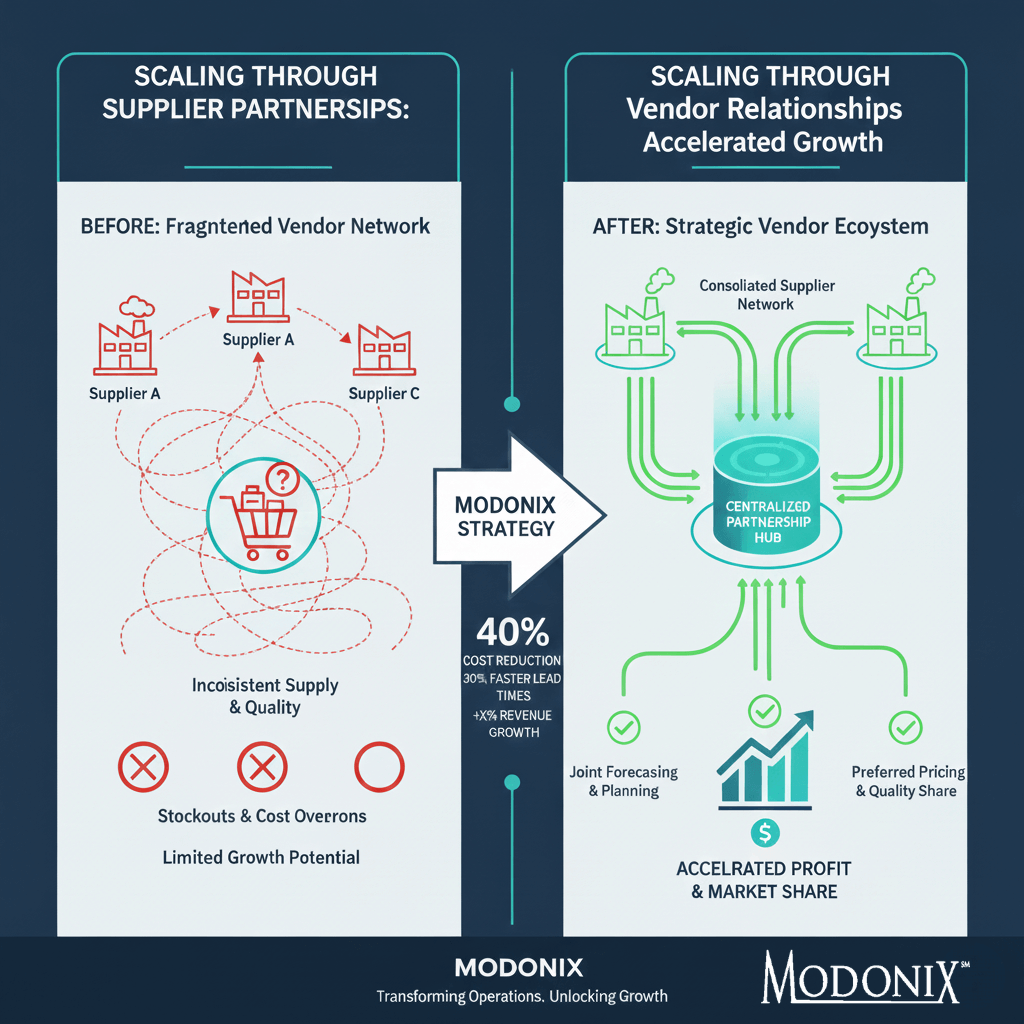
Modonix partnered with a U.S. e-commerce seller who relied on multiple suppliers but lacked strong relationships, clear communication, and predictable support. By strengthening vendor partnerships, formalizing communication paths, and creating a structured supplier management system, we increased stock availability, stabilized pricing, and improved operational efficiency within the first 90 days.

Overview
A rapidly growing U.S. retailer approached Modonix with a challenge that many scaling businesses face. Their catalog was expanding, customer demand was increasing, and their marketplace channels were performing well. Yet their supplier relationships were not keeping up.
Lead times were inconsistent. Communication was slow. Stock availability fluctuated from week to week. Some suppliers were unresponsive, and others offered pricing changes with no warning. The business could not scale because it lacked reliable vendor partners.
They needed stronger supplier relationships, clearer communication structures, and predictable operational support. They needed suppliers who were aligned with their growth and capable of supporting it.
Modonix applied a system-first methodology built on our Three Pillars: Performance, Insight, and Systems. Instead of switching suppliers or renegotiating in the dark, we rebuilt how the company interacts with vendors. We brought structure, professionalism, and clarity into every part of the supplier partnership process. The result was increased stock stability, stronger vendor cooperation, and faster growth across key product lines.
Challenges
The business had strong demand and competitive products, but their supplier partnerships created friction. The issues included:
- Unpredictable lead times
- Limited communication transparency
- Pricing changes without notice
- Slow response time from vendors
- No structured process for submitting POs or receiving confirmations
- Inconsistent support across product categories
- Difficulty prioritizing fast-moving SKUs
- Minimal accountability for late shipments
Despite having reliable products, the lack of strong supplier engagement limited growth and created operational instability.
Strategy Overview
Modonix designed a strategy focused on partnership maturity, communication clarity, and operational structure. The goal was not simply to improve vendor performance, but to turn suppliers into long-term growth partners.
We defined clear rules for communication, purchasing, invoicing, and restock timelines. With expectations documented, both sides operated with less friction and fewer surprises.
Weekly check-ins, quick escalation protocols, and direct communication paths helped eliminate misunderstandings and reduce delays.
By identifying top movers and sharing demand forecasts, suppliers could allocate resources and inventory more effectively.
Instead of ad-hoc communication, we introduced supplier scorecards, purchase order templates, centralized contacts, and a consistent review schedule.
SKU MAPPING
Mapped SKUs for strategic pricing insights.
PRICING SOP
Developed a structured pricing Standard Operating Procedure.
FEE ALIGNMENT
Aligned fees with margins to enhance profitability.
IMPLEMENTATION CADENCE
Established a regular cadence for pricing reviews.
Execution
Execution focused on strengthening trust, improving communication, and building a structured supplier management workflow to support long-term growth.
Supplier Scorecards
Communication Framework
• weekly update calls
• expected response times
• order confirmation templates
• escalation contacts
• shipment tracking requirements
This replaced inconsistent and unpredictable communication.
PO Standardization
• expected delivery dates
• priority items
• quantity thresholds
• shipping expectations
• backorder handling rules
Forecast Sharing
Relationship Development
Operational Documentation
• rules of engagement
• PO templates
• KPI dashboards
• communication protocols
• quarterly review processes
This created consistency and clarity across teams.

Results
Within 90 days, the business noticed a significant improvement in supplier cooperation, operational efficiency, and marketplace performance. Strong vendor relationships directly influenced capacity to scale.
Building strong supplier partnerships is not about negotiation, it is about clarity, communication, and consistency. When suppliers understand your priorities and operate inside a structured system, reliability increases, costs stabilize, and growth accelerates. Strong vendor relationships are a competitive advantage.
Ready to Grow with Modonix?
Let’s turn your digital goals into measurable results. Whether you’re scaling an eCommerce brand or refining your online strategy, Modonix is here to help.

Leverage our methodology for success. Measure your performance; Identify improvements using proven strategies; Implement; then Thrive.

Quick Links
Services
© 2026 Modonix LLC. All Rights Reserved. | Privacy Policy
Melbourne, FL