
- Home
- /
- Tools
- /
- Optimizing Product Pages Using Familiar User Behavior Patterns for Higher Engagement
Optimizing Product Pages Using Familiar User Behavior Patterns for Higher Engagement
Modonix partnered with an e-commerce brand whose product pages were underperforming despite strong traffic. By redesigning the page structure to align with familiar user behavior patterns how shoppers naturally scan, compare, and evaluate products we transformed the customer journey end-to-end, increasing engagement and improving conversion quality.

Overview
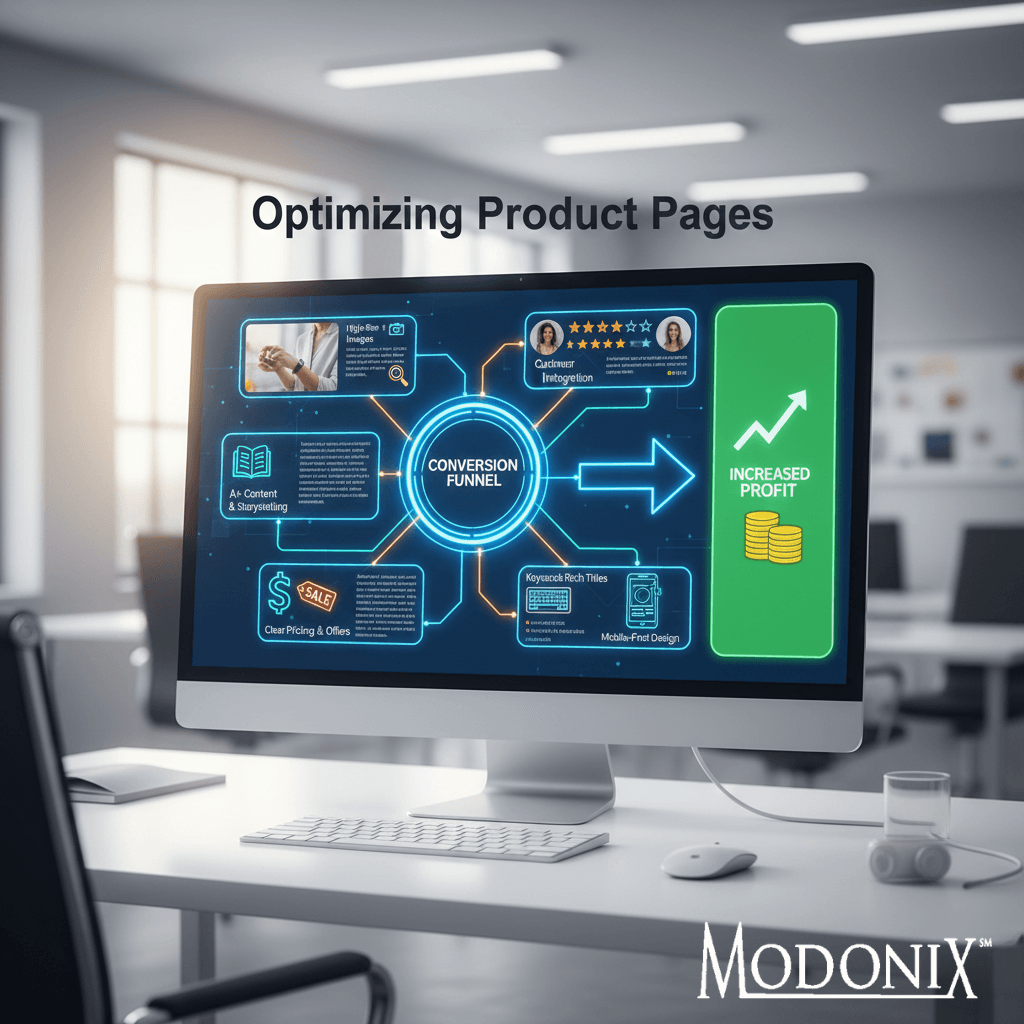
An e-commerce brand approached Modonix with a challenge: traffic was steady, but product page engagement was weak. Users weren’t scrolling, weren’t interacting with content, and weren’t converting at expected rates. Product pages felt “busy but unclear,” leaving customers unsure about what mattered or why the product was the right choice.
They needed a product page experience built around how users behave, not how teams assumed they behaved. That meant clarity, structure, predictability, and intuitive content flow that reduced cognitive load and guided the shopper toward action.
Modonix applied a system-first approach built on our Three Pillars: Performance, Insight, and Systems. Instead of adding more content or visuals, we rebuilt pages around familiar UX patterns patterns users already recognize from high-performing e-commerce sites. The result: pages that felt natural, trusted, and effortless to navigate.
The goal was simple: increase engagement and conversions by aligning every content and design decision with real-world user behavior.
Challenges
The brand had strong products, but their product pages worked against them. During the audit, several friction points became clear:
- Too much text crowded the top of the page
• Key benefits buried in long paragraphs
• Technical specs presented without context
• Visual hierarchy inconsistent across SKUs
• Comparison data missing, forcing users to search elsewhere
• Scattered content flow that didn’t match how customers evaluate products
• High bounce rates despite strong traffic sources
The result was predictable: customers felt unsure, overwhelmed, or confused decreasing engagement and hurting conversions.
Strategy Overview
Modonix applied a system first approach designed to align product pages with proven user behavior patterns. The goal wasn’t to redesign visually it was to redesign structurally.
The strategy focused on creating a predictable, frictionless experience across all pages using three pillars:
- Familiar scanning patterns (F-pattern, Z-pattern)
- Clear visual hierarchy
- Content grouped by decision-making stages
With a standardized structure, consistent messaging, and UX patterns that shoppers instantly recognize, engagement increased naturally, and conversions became more efficient.
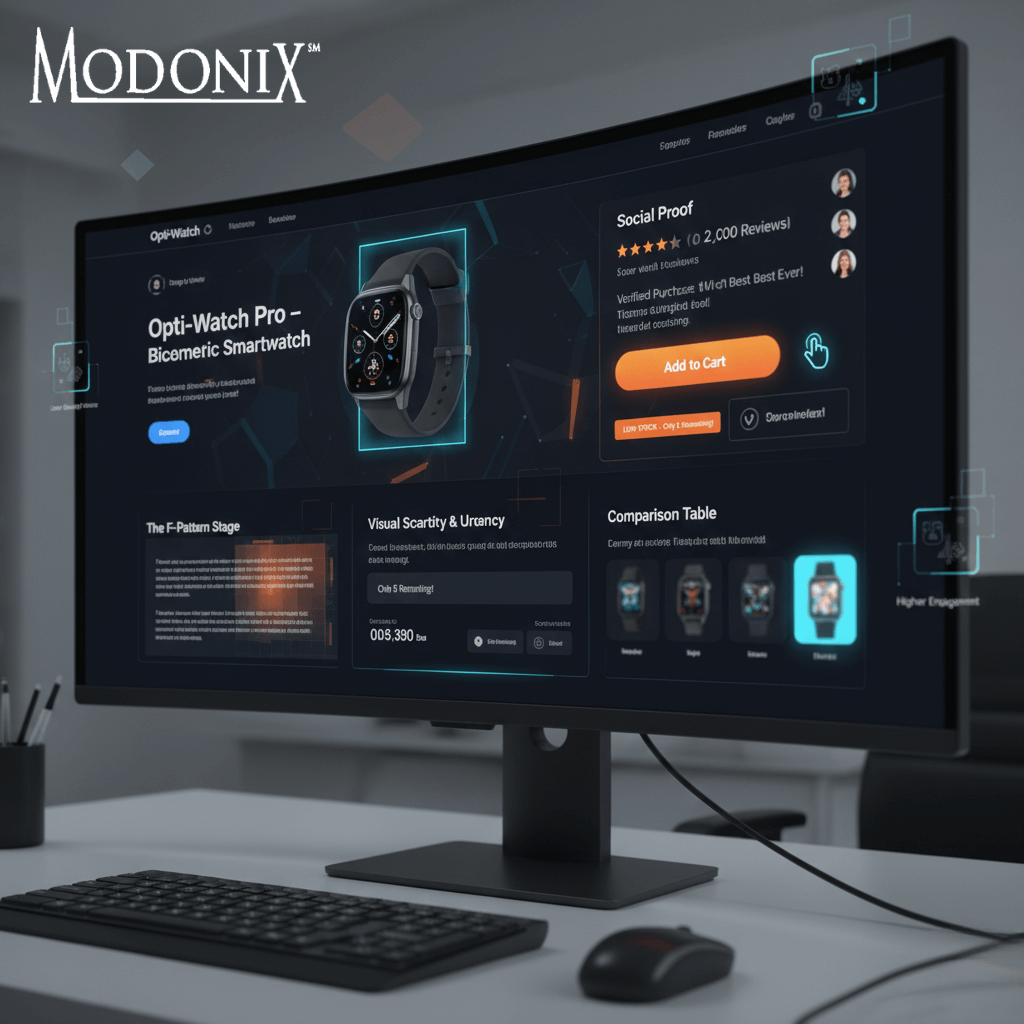
Every section hero image, benefit highlights, spec blocks, comparison tables was repositioned based on how users scan a page. By simplifying choices and presenting information in a sequence aligned with decision flow, we reduced hesitation and increased engagement.
The product pages suffered from fragmented layouts and inconsistent visual cues. By implementing consistency:
- Layout structures
• Icon sets
• Image sequencing
• Comparison blocks
• Benefit-driven headings
We transformed the catalog into a recognizable, trustworthy shopping experience.
Titles, metadata, and page copy were rebuilt using search-aligned formats. This ensured:
- Higher keyword relevance
• Better scannability
• Improved alignment between search intent and on-page experience
The outcome was improved organic performance and higher-quality traffic.
Instead of optimizing pages one by one, we built a repeatable framework defining:
- Content flow
• Section order
• Tone and vocabulary standards
• Page-length rules
• Placement of trust signals
Every new product page now launches with consistent UX logic, messaging, and structure eliminating page-by-page guesswork.
SKU MAPPING
Mapped SKUs for strategic pricing insights.
PRICING SOP
Developed a structured pricing Standard Operating Procedure.
FEE ALIGNMENT
Aligned fees with margins to enhance profitability.
IMPLEMENTATION CADENCE
Established a regular cadence for pricing reviews.
Execution
Execution focused on aligning every product page with how real shoppers think, read, and decide not on cosmetic design changes.
Page Structure Standardization
Behavior-Based Content Blocks
Comparison & Decision Support Tools
Unified Visual Framework
Results
Within 45–60 days, the brand achieved measurable improvements in engagement and conversion entirely driven by UX restructuring and content alignment.
Optimizing product pages isn’t about adding more content, it’s about understanding how users behave and aligning the page to match. When product pages follow familiar patterns, customers feel confident, clarity increases, and conversions follow naturally.
Ready to Grow with Modonix?
Let’s turn your digital goals into measurable results. Whether you’re scaling an eCommerce brand or refining your online strategy, Modonix is here to help.

Leverage our methodology for success. Measure your performance; Identify improvements using proven strategies; Implement; then Thrive.

Quick Links
Services
© 2026 Modonix LLC. All Rights Reserved. | Privacy Policy
Melbourne, FL