Case Study

Building Sustainable Ad Systems: Using Customer Lifetime Value Instead of Short-Term Metrics

Modonix partnered with a DTC brand struggling with unstable ad performance, short-term optimization cycles, and an over-reliance on ROAS. By shifting their analytics to Customer Lifetime Value (LTV) and restructuring campaigns around long-term profit behavior not daily ROAS fluctuations we rebuilt their ad system end-to-end, improving stability, increasing predictable acquisition, and strengthening retention-driven revenue within the first 75 days.

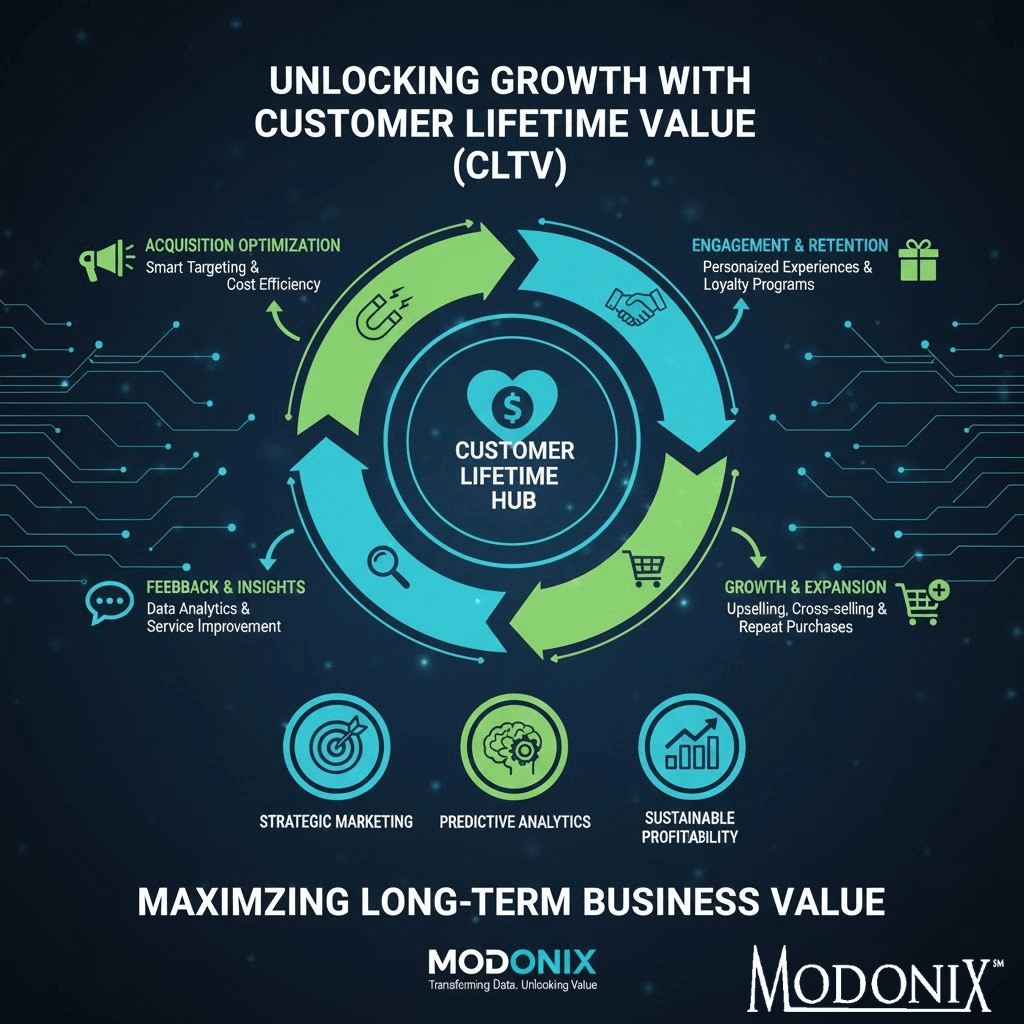
Customer Lifetime Value

Overview

A U.S.-based DTC brand approached Modonix with a familiar challenge: their ads generated conversions, but customer value was inconsistent, repurchase rates were unclear, and decision-making relied heavily on short-term metrics like daily ROAS, CPA, and platform attributed revenue.

Their campaigns looked “good on paper,” yet actual profitability was unstable and unpredictable.

Customers were converting but not sticking.
And the brand had no visibility into which segments, products, or channels were driving high-value buyers versus one-time purchasers.

They needed a complete modernization of their ad strategy: a lifetime-value-driven system, a retention-informed attribution model, and a scalable structure that prioritized long-term profitability over daily fluctuations.

Modonix applied a system-first approach built on our Three Pillars: Performance, Insight, and Systems. Instead of optimizing ads around cheap clicks or high ROAS windows, we rebuilt their acquisition system from the ground up integrating LTV analytics, rebalancing spends by customer value and aligning campaigns with long-term revenue behavior.

The goal was simple:
Turn an erratic, short-term account into a stable, sustainable, high-value acquisition engine without increasing ad spending.

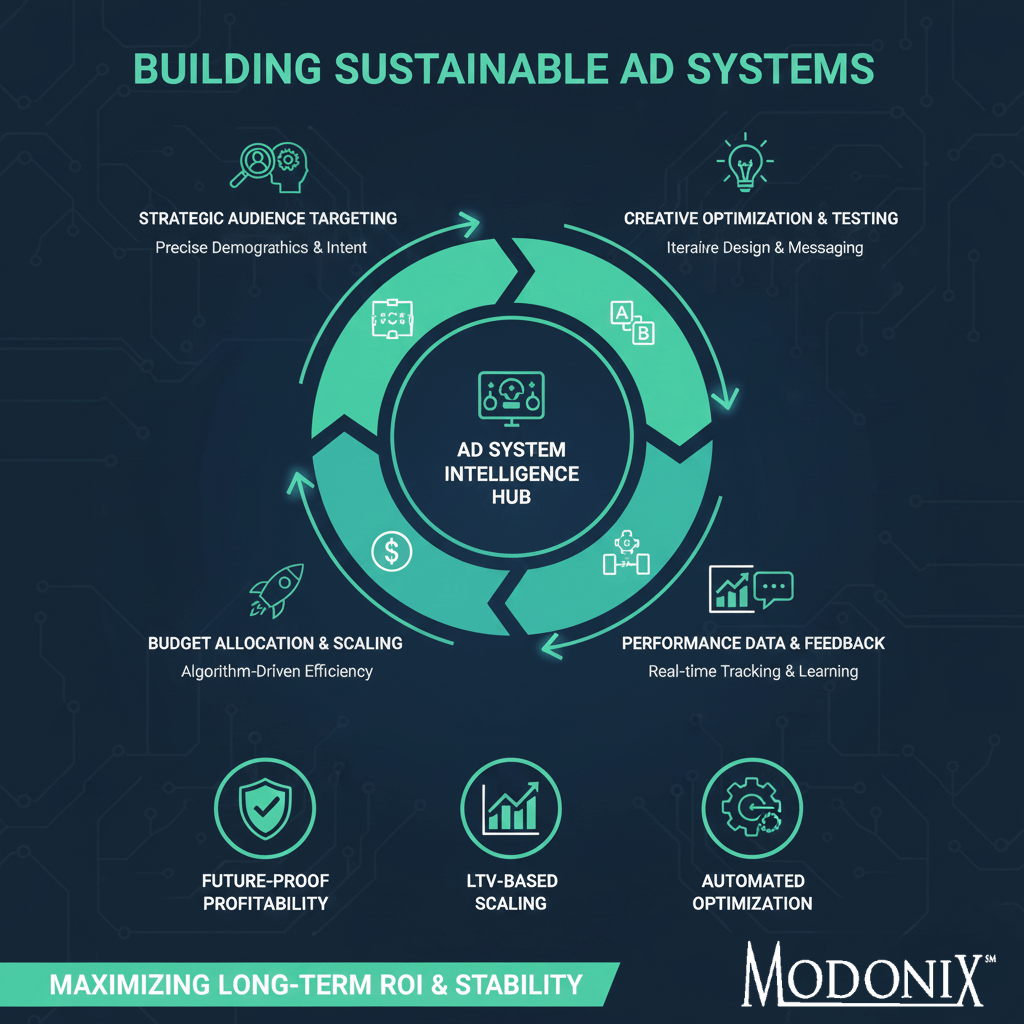
Building Sustainable Ad Systems

Challenges

Although the brand had healthy top-line revenue, their acquisition system hid several deep structural issues. Their campaigns were optimized almost entirely around immediate returns, leading to:

  • Over-investment in low-LTV buyers due to cheap CPAs
  • Under-investment in segments with strong long-term retention
  • Daily ROAS swings caused by inconsistent attribution
  • No visibility into which campaigns generated high-value customers
  • LTV not connected to ad reporting, making decisions guesswork
  • Leadership unable to forecast revenue accurately due to short-term data
  • Inability to scale because acquisition looked unprofitable in the short window

Despite strong products and demand, the brand was operating blindly to the actual value of the customers they were acquiring.

Opportunity

During the audit, Modonix uncovered several high-impact opportunities to rebuild the ad system around customer value:

  • Short-term ROAS masked the profitability of long-term segments.
  • High-LTV customers were coming from campaigns that looked “too expensive” under ROAS models.
  • Discounted offers brought in one-time buyers who never repurchased.
  • No segmentation existed for high-value or subscription-prone cohorts.
  • Retention data wasn’t integrated into acquisition decision-making.
  • Creative and messaging didn’t align with long-term customer behavior.
  • The brand lacked a unified model tying LTV to ad spend.

The real opportunity wasn’t better ads—
it was a better measurement system that recognized the long-term financial impact of each customer acquired.

Strategy Overview

Modonix implemented a lifetime-value-driven acquisition system designed to stabilize paid performance, improve buyer quality, and align marketing strategy with long-term financial goals.

Instead of optimizing for ROAS, the new model prioritized:

  • customer lifetime value (60–120 day windows)
  • payback period alignment
  • contribution margin over time
  • sustainable acquisition cost
  • repeat purchase probability
  • customer segment profitability

#key_pillar_point_heading_

#key_pillar_point_content

Execution

Execution focused on rebuilding how the business measured performance, not on cosmetic campaign tweaks. The objective was to create a scalable, predictable, value driven ad system that improved retention and stabilized acquisition.

LTV Modeling & Cohort Analysis

We rebuilt the analytics model to include:
• 30-, 60-, 90-, and 120-day LTV windows
• Contribution margin over time
• Retention curves
• Cohort performance by acquisition channel
• Payback periods per SKU group
• High-value vs. low-value buyer differentiation
This became the foundation for new acquisition decisions.

LTV-Driven Budget Allocation

Budgets were reallocated toward campaigns that produced high-LTV customers even when their short-term ROAS looked weaker. This shift stabilized acquisition quality and improved long-term revenue.

Creative & Messaging Rebuild

We have developed new creative themes based on retention psychology:
• Emphasizing recurring value
• Focusing on long-term use cases
• Highlighting benefits aligned with repeat purchase behavior
• Shifting away from discount-first messaging that attracted low-value buyers

Retention-Integrated Reporting

We connected CRM, store analytics, and ad platforms to produce unified dashboards showing:
• LTV by campaign
• Repeat purchase probability
• Payback periods
• Long-term contribution margin
• Retention uplift from each acquisition source
This gave leadership the clarity required for long-term forecasting.

Scaling Guardrails

Instead of daily ROAS checks, we built guardrails based on:
• Sustainable CAC thresholds
• LTV:CAC ratio
• 60-day payback windows
• Cohort stability signals
Acquisition became predictable and disciplined.
Using Customer Lifetime Value

Results

Within 75 days, the brand transformed its acquisition model improving stability, customer quality, and long-term profitability without increasing ad spend.

#metric

#result

+ 0 %

Within 75 days, the brand transformed its acquisition model improving stability, customer quality, and long-term profitability without increasing ad spend.

Key Takeaway

Sustainable ad systems aren’t built on ROAS.
They’re built on customer lifetime values as the only metric that connects acquisition to meaningful, long-term profitability.

By aligning campaigns with customer value, brands unlock stability, scale, and predictability—turning paid advertising into a sustainable growth engine.

Ready to Grow with Modonix?

Let’s turn your digital goals into measurable results. Whether you’re scaling an eCommerce brand or refining your online strategy, Modonix is here to help. Book a consultation and take the first step toward smarter, faster growth.

Wait! Book a free growth audit – it only takes 30 seconds.