Case Study

Fixing Operational Bottlenecks: Designing a Scalable Order-to-Fulfillment Workflow

Modonix partnered with a fast-growing e-commerce seller facing slow fulfillment times, order delays, and bottlenecks across multiple departments. By rebuilding their order-to-fulfillment workflow, standardizing processes, and creating a unified operational system, we improved processing speed, reduced errors, and strengthened customer satisfaction within the first 60 days.

Fixing Operational Bottlenecks

Overview

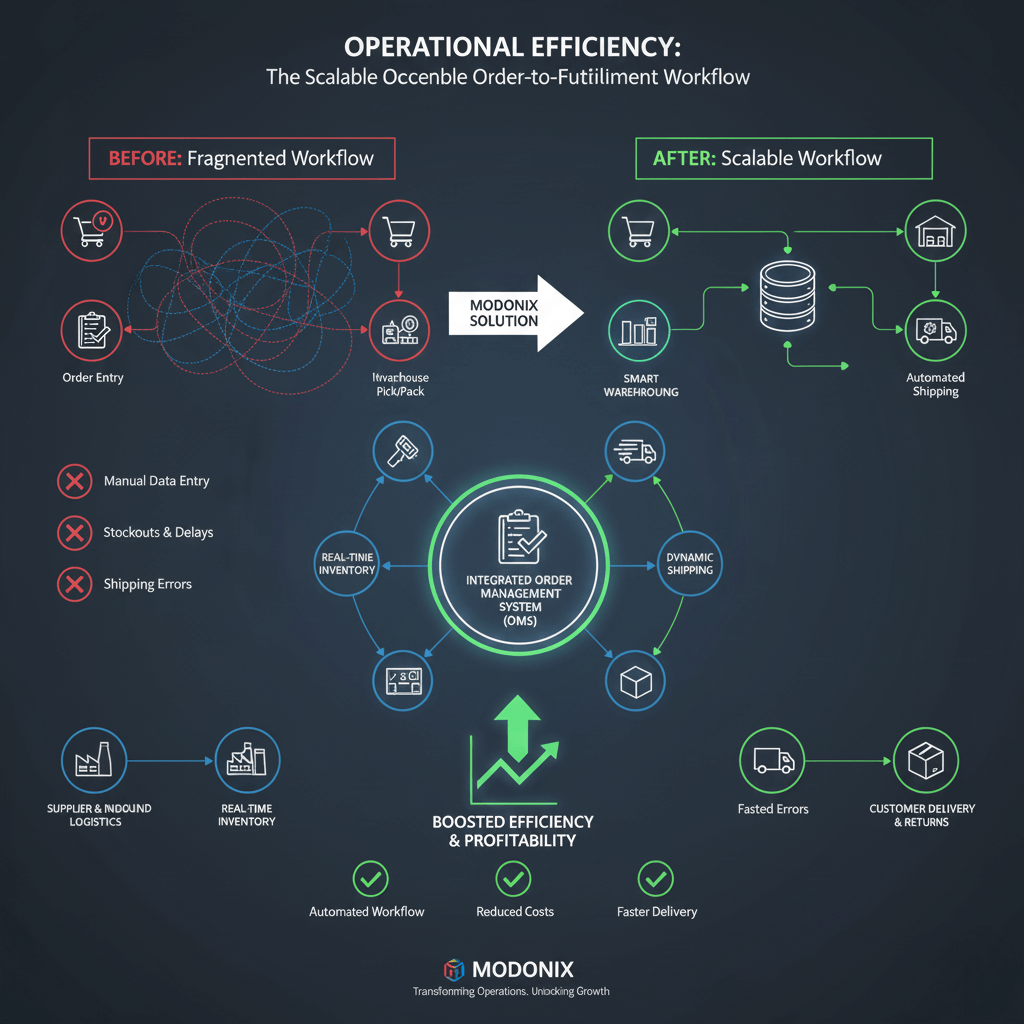
An established U.S. retailer approached Modonix with a problem they had struggled with for years. Their order volumes were increasing, but their internal workflow was not keeping up. Orders were getting stuck between sales, inventory, and fulfillment. Communication slipped through the cracks. Processes lived in people’s heads instead of in a system.

Orders were delayed, customer frustration grew, and operational inefficiency limited the business from scaling.

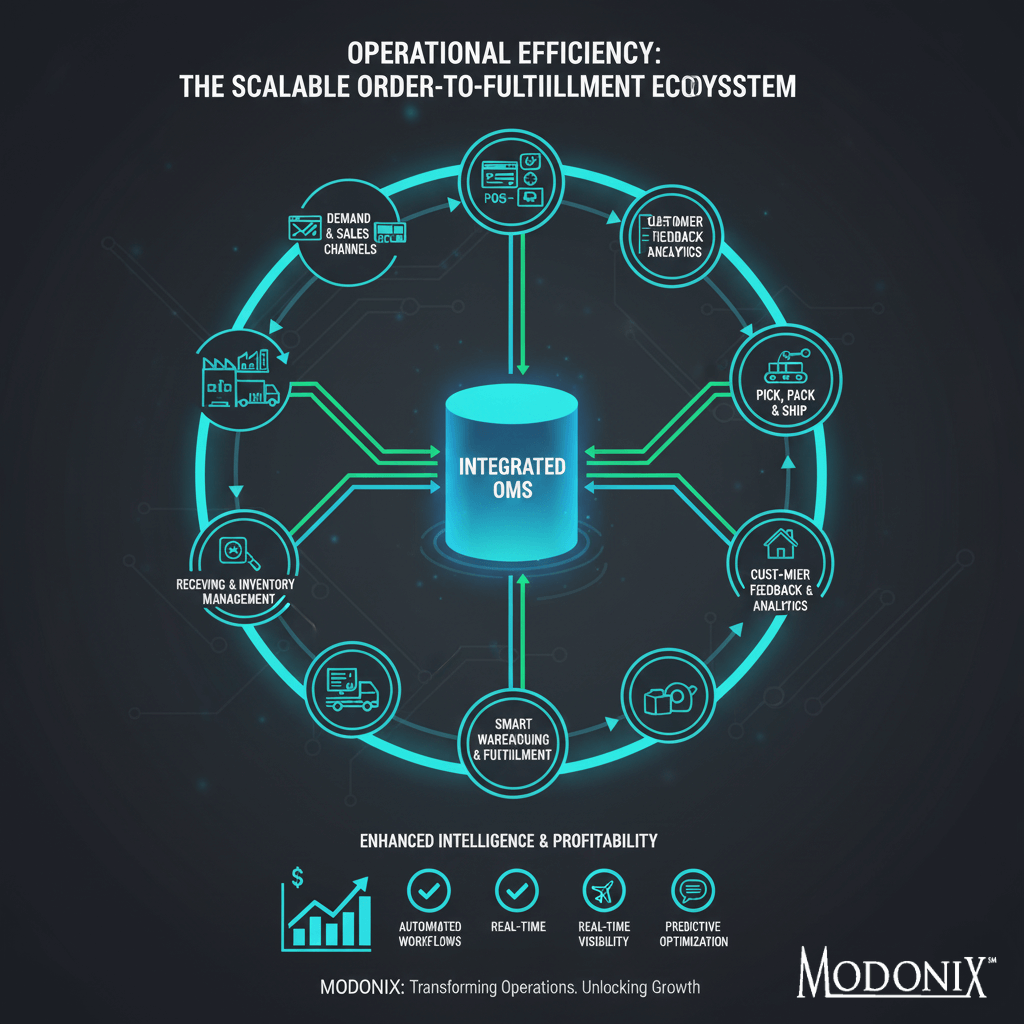
They needed more than a software fix. They needed a complete redesign of their order-to-fulfillment workflow. A clear pathway that every order follows. A process that connects teams, tools, and data into a single, predictable operational engine.

Modonix applied a system-first approach built on our Three Pillars: Performance, Insight, and Systems. Instead of patching the workflow ticket by ticket, we rebuilt the entire fulfillment process from the ground up. The result was stronger clarity, faster processing, and a scalable operational backbone that supports growth without chaos.

Fixing Operational Bottlenecks

Challenges

The company had years of successful sales behind them, but their internal systems had not evolved. Their workflow was fragmented across multiple tools, multiple people, and multiple steps that were inconsistent from day to day. This created:

  • Orders piling up during peak times
  • No standardized process for order routing
  • Inventory mismatches between marketplaces and internal systems
  • Slow communication between customer service, warehouse, and purchasing
  • Frequent overselling and backorders
  • Manual steps that increased processing time
  • No clearly defined workflow ownership
  • A fulfillment pipeline that could not scale with demand

Despite strong demand, operational bottlenecks were limiting the company’s ability to grow.

Opportunity

During the audit, Modonix identified several high impact opportunities to streamline the workflow and eliminate bottlenecks:

  • Unify data flow across sales channels, inventory systems, and fulfillment
  • Create a standardized order lifecycle with clear steps and ownership
  • Improve communication paths between customer service, warehouse, and purchasing
  • Reduce manual work by introducing automation and rule based routing
  • Establish fulfillment time standards that ensure consistent processing
  • Implement exception handling rules to manage backorders and special cases
  • Document every operational step to eliminate tribal knowledge

The real opportunity was to build a clean, scalable order-to-fulfillment workflow that reduces friction and delivers predictable outcomes.

Strategy Overview

Modonix created a system-first operational foundation focused on order clarity, workflow consistency, and scalable fulfillment. Instead of fixing surface layer issues, we redesigned the workflow to ensure every order moves through predictable steps with clean data, clear ownership, and minimal friction.

#key_pillar_point_heading_

#key_pillar_point_content

Execution

Execution focused on operational clarity, standardization, and removing friction from the order cycle. Every step was designed to make the workflow faster, cleaner, and easier to scale.

Order Workflow Mapping

We rebuilt the full order lifecycle from purchase to shipment. Each step was assigned a clear owner, required data, and expected timeline.

Process Standardization

We eliminated inconsistent practices by defining standard operating procedures for:
• order intake
• exception handling
• inventory checks
• warehouse routing
• picking and packing
• shipment confirmation

System Alignment

We synchronized marketplace feeds, internal inventory, and warehouse systems to ensure accuracy across channels.

Automation Rules

We implemented workflow automation for repetitive tasks such as:
• routing orders to the correct warehouse
• flagging exceptions
• triggering backorder alerts
• syncing tracking numbers

Communication Framework

We created structured communication paths between customer service, warehouse staff, and purchasing to reduce delays and eliminate misalignment.

Operational Documentation

We documented every step of the workflow, creating a complete playbook that ensures consistency across teams and new hires.
Fixing Operational Bottlenecks

Results

Within just 60 days, the company saw measurable improvements in workflow speed, clarity, and operational performance. These gains were driven entirely by process redesign and better system alignment.

#metric

#result

+ 0 %

Within just 60 days, the company saw measurable improvements in workflow speed, clarity, and operational performance. These gains were driven entirely by process redesign and better system alignment.

Key Takeaway

Fixing operational bottlenecks starts with building a clear, predictable workflow. When every order follows the same path, teams communicate better, errors drop, and fulfillment becomes a scalable engine for growth. Operational clarity is the foundation of marketplace performance.

Ready to Grow with Modonix?

Let’s turn your digital goals into measurable results. Whether you’re scaling an eCommerce brand or refining your online strategy, Modonix is here to help. Book a consultation and take the first step toward smarter, faster growth.

Wait! Book a free growth audit – it only takes 30 seconds.